2 hours ago
The Drag Noise of Survival: How Young Joon Kwak Is Rewiring Queer Culture Through Sound, Sculpture, and Chosen-Family Rituals
READ TIME: 23 MIN.
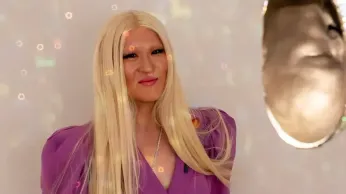
In queer nightlife, it is not unusual to find performance, fashion, and music colliding on the same stage. What is unusual is to find those elements folded into an art practice that moves seamlessly from underground club to major museum, insisting that care work, transition, and survival themselves are worthy of the spotlight. That is where multidisciplinary artist and performer Young Joon Kwak has positioned their work: at the intersection of experimental drag, sound, sculpture, and community ritual.
Named by Artsy as one of “30 Artists Defining Queer Art Now” for Pride Month 2025, Kwak has become a central figure in a generation of LGBTQ+ creators using performance and installation to imagine new ways of being together in public. Their practice speaks directly to queer and transgender audiences navigating an era of heightened legislative and cultural attacks, transforming the aesthetics of drag and noise into tools for collective resilience.
Kwak is described by Artsy as a “multidisciplinary artist” whose work spans sculpture, performance, video, and sound. Born in South Korea and based in Los Angeles, Kwak has become known for fluid, biomorphic sculptures that evoke fragmented bodies and mutable forms, often made from materials such as resin and metal that reflect and distort viewers’ own images back at them. The Institute of Contemporary Art, Los Angeles notes that Kwak’s work frequently explores “the malleability of the body” and the pressures placed on transgender people and queer communities of color to appear legible or acceptable within mainstream culture.
At the same time, Kwak is deeply embedded in music and nightlife. Artsy highlights them as the lead performer of the experimental drag band Xina Xurner, a project that merges heavy, distorted soundscapes with theatrical drag performance. In Xina Xurner, Kwak’s voice is processed, layered, and stretched, turning club vocals into something closer to a synthetic choir or a primal scream, set against industrial, noise, and dance beats that feel as much like a protest as a party.
By placing their body and voice at the center of such an abrasive, maximal sound world, Kwak stages what institutions like ICA LA describe as a refusal of restrictive norms of beauty and gender presentation. The performances create an aesthetic of excess and distortion that resonates with many transgender people and gender-nonconforming audiences who have experienced their own identities as misread, amplified, or silenced by dominant culture.
Just as significant as the work on stage is the space that Kwak co-founded offstage: Mutant Salon, a collaborative platform and salon-style performance and beauty space centered on queer and transgender people of color. Artsy notes that Mutant Salon offers “beauty services to queer and trans people of color,” framing these acts of care as both service and performance.
Exhibition materials from ICA LA describe Mutant Salon as a project that has appeared in museums, galleries, and community spaces, with artists and stylists transforming spaces into improvised salons for hair, nails, makeup, and conversation. These events often incorporate video projections, sculptures, and live sound, blurring the lines between social gathering and performance art.
In this context, haircuts, nail art, and makeup design are not secondary to the “real” artwork; they are the artwork. The Los Angeles–based nonprofit Human Resources has documented Mutant Salon’s events as spaces where queer and transgender people of color come together to exchange skills, experiment with self-presentation, and build networks of care that persist beyond the gallery walls. By positioning these beauty practices as central rather than peripheral, Kwak and their collaborators foreground the labor and creativity of communities that are often treated as an afterthought in mainstream fashion and art industries.
For LGBTQ+ communities accustomed to having their bodies legislated, policed, or pathologized, this approach reframes beauty as a form of self-determination. Major LGBTQ+ advocacy organizations have documented how anti-transgender legislation and rhetoric in the United States has increased stress and barriers to gender-affirming care. Within that environment, Mutant Salon’s insistence on beauty as a right, shared publicly and joyfully, carries political weight.
Kwak’s work with Xina Xurner situates them within a broader movement of queer and transgender artists who are redefining what club music and performance can sound like. Publications covering LGBTQ+ music trends for 2025, such as The Standard’s feature on “LGBTQ+ Artists To Watch in 2025,” note a growing visibility for artists whose work openly engages with transgender identity, non-binary expression, and queer joy in experimental forms, including electronic and genre-blending music.
Where some queer pop stars have found success by relaxing into familiar radio structures, Kwak and their peers in experimental scenes are using dissonance and intensity to articulate a different set of experiences. In Xina Xurner’s recordings and live sets, vocals may lurch from melodramatic balladry to guttural noise, while costumes and makeup push drag into monstrous or cyborg territory. Arts institutions that have hosted the band describe these performances as “maximal” and “overwhelming,” with the sound mixing club culture, industrial music, and camp theatrics.
This aesthetics of excess stands in contrast to assimilationist narratives that suggest LGBTQ+ people are safest when they appear most “respectable” or palatable to mainstream norms. Queer cultural historians have documented how drag, ballroom culture, and underground club scenes have long served as spaces where marginalized LGBTQ+ communities openly play with spectacle, defiance, and fantasy. By bringing this lineage into contemporary art institutions and music venues, Kwak participates in a broader reclamation of queer and transgender unruliness as a resource rather than a liability.
Artsy explicitly situates Kwak’s work within today’s political climate, noting that they create during “a political moment in which the rights and safety of trans people are increasingly under attack.” National LGBTQ+ advocacy groups, including the Human Rights Campaign, have documented an unprecedented number of state-level bills in the United States targeting transgender people’s access to health care, sports participation, and public accommodations in recent years.
In this context, Kwak’s focus on concealment, metamorphosis, and collective beauty rituals can be read as more than metaphor. Artsy emphasizes that Kwak “contemplates concealment and metamorphosis as a means of survival,” suggesting that their sculptures and performances echo the strategies many transgender and queer people of color adopt in response to surveillance and discrimination. ICA LA similarly highlights how Kwak’s form-shifting sculptures ask viewers to reconsider what bodies are allowed to look like and how they move through space.
For audiences encountering Kwak’s work, this can resonate with everyday experiences: changing appearance to navigate safety concerns, cultivating online alter-egos, or finding refuge in queer nightlife where different rules about gender and presentation apply. LGBTQ+ cultural organizations have noted that spaces such as clubs, salons, and community centers have historically functioned as vital sites of safety, mutual aid, and political organizing, particularly for transgender women of color and other marginalized groups.
By transforming these kinds of spaces into both subject and setting for their art, Kwak bridges institutional art worlds and grassroots queer life.
Part of what makes Kwak’s work distinctive within LGBTQ+ culture is their approach to fashion and the body. Rather than treating clothing and makeup as fixed signifiers of identity, they use them as raw material for continuous transformation. Exhibition documentation from ICA LA describes Kwak’s costumes and sculptural garments as “armor-like” and “amorphous,” sometimes incorporating mirrored or reflective surfaces that pull the viewer into the work.
This approach aligns with broader trends in queer fashion, where designers and performers are increasingly rejecting gendered categories in favor of modular, fluid, or customizable pieces. Coverage of contemporary LGBTQ+ music artists for 2025 notes similar practices, citing performers who blend historically gendered silhouettes, repurpose clubwear, and incorporate DIY aesthetics to assert control over how their bodies are read. Kwak’s work pushes this even further by building sculptural extensions of the body that can be worn, displayed, or turned into stage sets, suggesting that identity is not only performed but continuously fabricated.
In Mutant Salon events, fashion and grooming become community archives: hairstyles, nail designs, and makeup looks are photographed, discussed, and shared on social media platforms such as Instagram, turning ephemeral styles into documented expressions of queer and transgender life. When participants tag Mutant Salon or collaborating artists on Instagram , they extend the reach of these gatherings beyond the physical room, contributing to a distributed record of queer aesthetics in motion.
Artsy’s 2025 list places Kwak among thirty LGBTQ+ artists shaping “the future of contemporary art,” reflecting how practices that once lived primarily in underground scenes are now recognized as central to conversations about queer culture. The feature underscores that Kwak’s contributions are not only artistic but infrastructural: through Mutant Salon and Xina Xurner, they help maintain networks of performers, stylists, musicians, and audiences that support each other’s work.
This shift from margin to center mirrors broader changes in queer culture. Recent overviews of LGBTQ+ artists in music and visual art have noted that queer creators are increasingly visible at the top of charts and in major galleries, bringing explicitly LGBTQ+ narratives and aesthetics into mainstream conversation. However, these same overviews emphasize that visibility alone does not guarantee safety or resources, especially for transgender people and queer communities of color.
Kwak’s career illustrates one possible response: build structures—bands, salons, collaborative platforms—that redistribute attention and resources back into the communities that nurtured the work in the first place. By doing so, they model an approach to queer art that is less about individual stardom and more about collective survival and expression.
The queer futures that Kwak imagines are loud, messy, and full of contradictions. In their performances, joy and rage sit side by side: a distorted pop hook might give way to a harsh noise breakdown, a glamorous drag look might unravel into something monstrous or alien. In the salon, care rituals unfold against backdrops of experimental sound and sculpture, suggesting that comfort and discomfort, glamour and grit, can coexist.
For many LGBTQ+ people, this multiplicity feels familiar. Community organizations and cultural commentators have observed that contemporary queer life often involves navigating overlapping realities—legal setbacks alongside growing visibility, online community alongside offline risk. Kwak’s work neither resolves these tensions nor turns away from them; instead, it stages them, giving audiences both a mirror and a soundtrack.
As Pride seasons continue to evolve and conversations about transgender rights and representation intensify, artists like Young Joon Kwak are helping to define what it means to experience queer life not only as identity but as a set of shared practices: getting ready together, making too much noise together, transforming spaces and bodies together. In doing so, they ensure that queer culture’s future is not only visible, but also, in every sense of the word, vibrantly alive.